
Almost 1 in 5 California homeowners are seriously thinking about adding an ADU over the next five years. This shift is largely shaped by state law changes and tight housing markets. This guide offers a clear path for homeowners looking to work with trusted ADU builders. It shows why professional ADU construction services matter. It also breaks down costs and explains what to expect during the design, permitting, and construction phases.
Explore ADU Construction in Redmond, WA
ADUs can increase property value by 20–35%. They often generate monthly rental income between $1,500 and $3,500 in many California markets. In San Jose, long-term rents can exceed $2,500. Project costs can range from $80,000 to $400,000 or more, depending on the ADU type and scope.
Working with professional ADU construction services and an experienced firm can reduce unwanted surprises. Established firms, including Renovate Builders (renovatebuilders.com), can provide valuable insight. They help clarify best practices for permitting, prefab-versus-site-built choices, and overall project accountability.
In this article, you’ll find actionable criteria to vet contractors and compare prefab and site-built options. Choosing trusted ADU builders who stay on schedule and on budget is critical. A strong process starts with the questions and checklists in the sections below.
Why Professional ADU Construction Services Matter For Your Property
A successful accessory dwelling unit project often depends on professional ADU construction services. A skilled team helps keep the process smooth, permits on track, and outcomes more predictable. By hiring certified ADU builders, homeowners gain better budget clarity and stronger confidence throughout the project.
Design-build ADU teams handle design, engineering, permitting, and construction under one roof. Integrated crews, like those used by companies such as LA Family Builders and SnapADU, help reduce coordination delays. That approach can support fixed-price proposals before permit submission, improving cost transparency and reducing the risk of budget overruns.
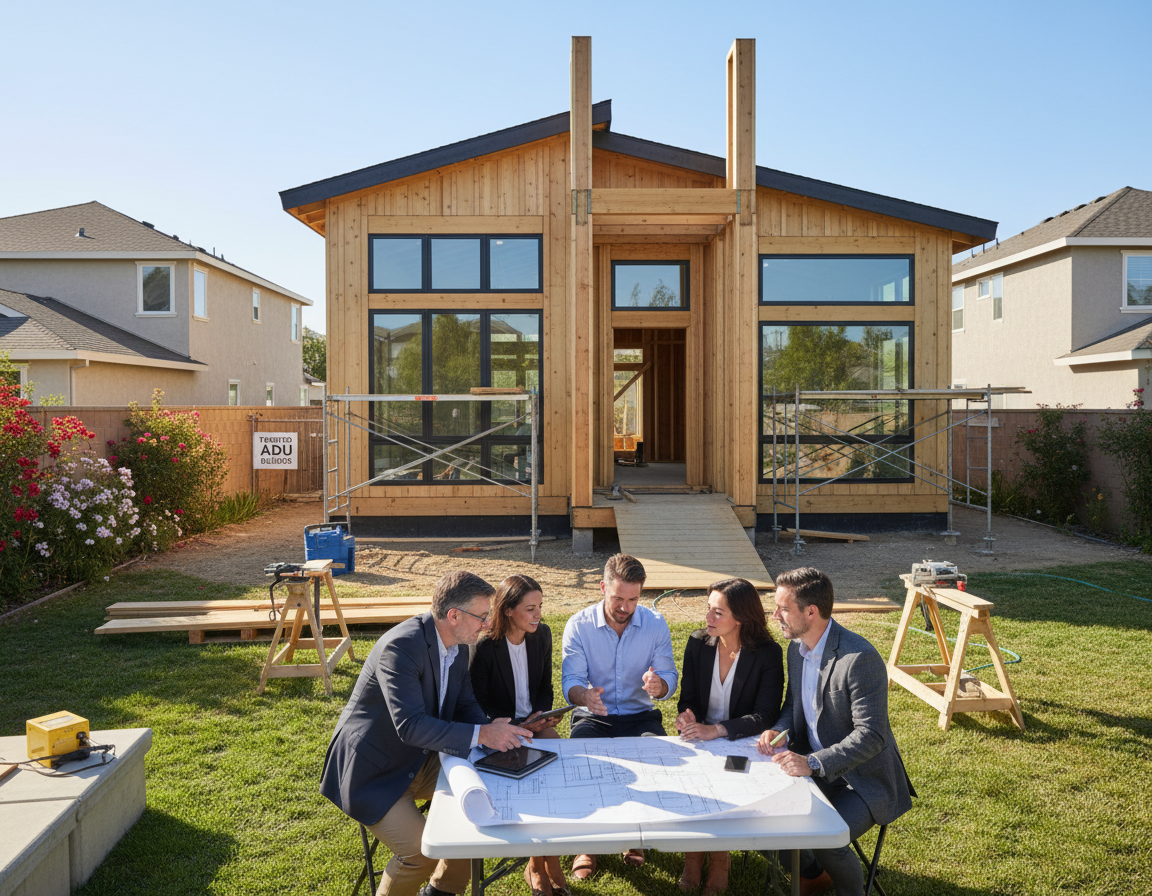
Prefab units from companies like Abodu or Plant Prefab can speed up construction by up to 30–40 percent, delivering consistent quality. Site-built projects, on the other hand, allow for customization to the lot and long-term value. A skilled ADU construction team will guide you in choosing the best option for your goals.
Adding an ADU can significantly boost property value while also generating rental income. Across many California markets, property values often rise by about 20–35 percent after an ADU is completed. Rental income varies by market, but it often falls between $1,500 and $3,500 per month, with San Jose commonly reaching $2,500 or more.
A realistic budget should account for construction costs, design and engineering fees, permit charges, and site preparation. Typical costs include design & engineering ($5,000–$15,000) and permits ($3,000–$15,000). Prefab options may save time and occasionally reduce costs, although delivery and installation charges can offset part of those savings.
Some companies help homeowners secure financing, grants, and ADU-specific loan products. Companies such as Villa Homes and SnapADU work with lenders experienced in accessory dwelling unit projects. This support makes projects more affordable and simplifies funding conversations.
Local knowledge is critical for approvals and compliance. Reputable ADU builders near me understand city-specific zoning, setback rules, parking requirements, and utility hookup issues. Regionally focused teams like LA Family Builders and Acton ADU expedite reviews with permit-ready plans and feasibility studies.
A feasibility-first review assesses site access, fire safety needs, buildable envelope, and utility constraints. That early analysis often leads to more accurate budgets and stronger completion outcomes. A reliable local firm will provide review data, references, and past completion statistics to build trust.
When searching for reputable ADU builders near me, look for strong local reviews, steady completion rates, and clear communication. A certified ADU builder paired with a skilled ADU construction team can turn a complex project into a manageable process that aligns with your budget and timeline.
Trusted ADU Builders
Selecting the right team is critical for any accessory dwelling unit project. Trust is built on clear records, warranties, and a single point of accountability. This guide will help you identify the key traits, types of reputable firms, and warning signs to watch out for.
What Makes An ADU Builder “Trusted”
A trusted ADU builders firm has a proven track record. Look at their completed ADUs, review their portfolios, and check local references. Companies such as SnapADU and LA Family Builders often share project counts and client feedback, which helps demonstrate consistency.
Transparent pricing and fixed-price proposals before permits are essential. These measures help prevent surprise costs. You should expect clear estimates covering design, permits, site work, and construction.
Licensing, insurance, and transferable warranties are critical protections. Look for one-year workmanship, multi-year MEP coverage, and ten-year structural warranties. Certified ADU builders should be willing to provide those details in writing.
In-house capabilities for design, engineering, permitting, and construction simplify communication. Compared with a model that relies heavily on many subcontractors, this approach reduces risk and often speeds up problem-solving.
Types Of Reputable ADU Firms
Full-service design-build contractors handle feasibility, design, permitting, and final inspection. They are ideal for complex sites and owners seeking a single responsible party. SnapADU and LA Family Builders are examples of that design-build model.
Prefab and modular manufacturers offer factory-built units with predictable timelines and pricing. Brands such as Abodu, Plant Prefab, and Dvele often appeal to buyers who value speed, consistency, and process control.
Financing-focused builders help secure grants and lender relationships, improving affordability. They also guide homeowners through funding options, paperwork, and lender expectations.
Some specialty firms focus on garage conversions or on more design-driven projects. Architecture-led studios like Otto ADU and boutique builders deliver unique aesthetics and tailored solutions.
ADU Builder Red Flags To Watch For
A lack of in-house permitting or engineering is a major concern. Relying on many subcontractors without clear coordination often causes delays and finger-pointing.
Another warning sign is the absence of a fixed-price proposal or reluctance to provide a detailed cost breakdown. If a builder refuses to itemize design, permit, and construction costs, later disputes become more likely.
Poor or unverifiable references, missing licenses, and vague warranty commitments should prompt a careful walkaway. Feasibility reviews that ignore utilities, fire access, or site constraints frequently cause projects to stall during permitting.
When searching for reputable ADU builders near me, prioritize companies with transparent contracts, verified projects, and strong warranty coverage. This approach helps you find reliable accessory dwelling unit builders who reduce risk and deliver predictable outcomes.
Comparing Reliable Accessory Dwelling Unit Builders And Top-Rated ADU Contractors
Choosing the right team usually comes down to balancing cost, schedule, and quality. This guide helps you compare top-rated ADU contractors and reliable accessory dwelling unit builders. You’ll find trusted ADU builders and a skilled ADU construction team to make an informed choice.
- Confirm licensing, liability insurance, and warranty terms. Request proof of a general contractor license, worker coverage, and transferable warranties.
- Review portfolios that include local examples matching your ADU type, whether detached, attached, garage conversion, or prefab. Look for projects in similar neighborhoods or lot conditions.
- Ask about completion rates and actual timeline performance. Learn how the builder handles permit delays and site challenges.
- Request a detailed feasibility review covering zoning, utilities, access, fire rules, and a realistic budget range based on actual site variables.
- Review online ratings and comments on Google, Yelp, and Houzz. Also ask for recent homeowner references and contact them directly.
Important Questions To Ask During Consultations
- Do you offer a feasibility study, and at what point is pricing locked in? How many site variables do you evaluate?
- Is pricing fixed before permit submission? Which items are included in the price, such as design, engineering, permits, site prep, utilities, and inspections?
- What timeline should I expect from feasibility to occupancy, and what is your average permitting time in my city?
- Do you manage all permitting and agency coordination in-house? Are there common local hurdles like HOA rules or utility easements?
- What warranties do you offer and what is your response time for service calls?
How To Compare Cost, Timeline, And Customization
| Factor | Prefab Builders | Site-Built Design-Build Firms |
|---|---|---|
| Typical Pricing | Transparent fixed ranges; lower variability (example ranges often $150k–$300k) | Pricing per square foot varies by metro area, and customization raises cost (often $300–$450/sq ft in larger cities) |
| Typical Timeline | Factory-controlled schedules can deliver under three months from start of production | Longer timelines because of on-site work and permitting, but better for complex staging and site solutions |
| Customization | Consistent modern designs with limited customization | High customization for matching the main house, handling difficult lots, and supporting multi-unit work |
| Best Use Case | Fast delivery and predictability on simpler lots | Tricky lots, HOA-sensitive properties, and projects requiring architectural integration |
Match your priorities to the builder type. If speed and fixed pricing are your biggest priorities, prefabricated options from top-rated ADU contractors may be the right fit. If your project involves site complexity or architectural integration, a trusted ADU builders firm with full design-build service is often the better choice. That type of team is better equipped to manage permits and site-specific constraints.
Process And Expectations When Working With An Experienced ADU Construction Company
Collaborating with a seasoned ADU construction company starts with a well-thought-out plan. A reputable accessory dwelling unit builder typically starts with a feasibility review. That review looks at zoning, setbacks, parking, utilities, fire access, and general site access. It helps define the true buildable area, which can reduce permit delays and unexpected costs.
Feasibility Review And Pre-Construction Planning
A detailed feasibility report will follow, detailing site specifics and budget estimates. Trusted ADU builders will also provide a project timeline and highlight possible hurdles.
Leading ADU contractors usually focus on constructability from the very beginning. That approach can improve completion rates and reduce change orders during construction.
Design Development, Permits, And Approvals
The design phase should produce construction-ready plans, structural engineering, and permit documentation. Certified ADU builders with in-house drafting and engineering often help speed municipal review and coordination.
Experienced builders efficiently navigate plan check responses and revisions. Familiarity with local regulations, including those in markets like San Jose and San Diego, often accelerates the approval process. Some companies also offer pre-approved floorplans that can lower design costs and speed permit review.
Construction, Project Management, And Quality Control
The construction phase usually includes mobilization, site prep, foundation work, framing, MEP installation, interior finishes, inspections, and final occupancy steps. Reliable accessory dwelling unit builders keep clients informed through portals for schedules, photos, documents, and invoices.
Quality control systems and warranty programs help protect homeowners. Many trusted ADU builders offer warranties: one year for workmanship, two years for systems, and ten years for structure. Responsive warranty service ensures long-term property value.
Cost Transparency And Financing Support
Transparent cost breakdowns should clearly detail construction, design, permits, site prep, and contingencies. An experienced ADU construction company will often provide a fixed-price proposal before permit submission, which helps reduce financial risk.
Builders may also work with lenders or grant programs to help homeowners access ADU loans and local incentives. For rental-focused projects, top-rated ADU contractors may also advise on layouts and finishes that improve long-term rental value.
Conclusion
Choosing trusted ADU builders means prioritizing teams that handle design, permitting, and construction under one roof. A design-build firm with strong in-house capabilities can reduce surprises, speed approvals, and simplify communication. For homeowners, choosing an experienced ADU construction company offers a clear feasibility-first approach and fixed-price proposals.
Weigh prefab speed against site-built customization based on your lot conditions, goals, and budget. Reliable accessory dwelling unit builders should also provide warranties, documented completion records, and local portfolio examples. Top-rated ADU contractors usually offer transparent comparisons of cost, timeline, and customization so homeowners can make better-informed decisions.
Consider Renovate Builders as one possible option and request a feasibility review plus a fixed-price proposal tailored to your property. Before reaching out, gather your property documents and prepare questions from the vetting checklist in this guide. Also, ask for local ADU examples. Use the provided cost ranges, timeline expectations, and feasibility variables to compare bids effectively.
Move forward by reviewing proposals based on cost, timeline, warranties, and past performance. With clear documentation and the right partner—whether a local design-build firm or a top-rated ADU contractor—you enhance the likelihood of a smooth build and a lasting asset for your property.
Related: How Kitchen Remodeling Contractor Redmond WA Works: Top Benefits